you probably run seven apps. none of them talk to each other.
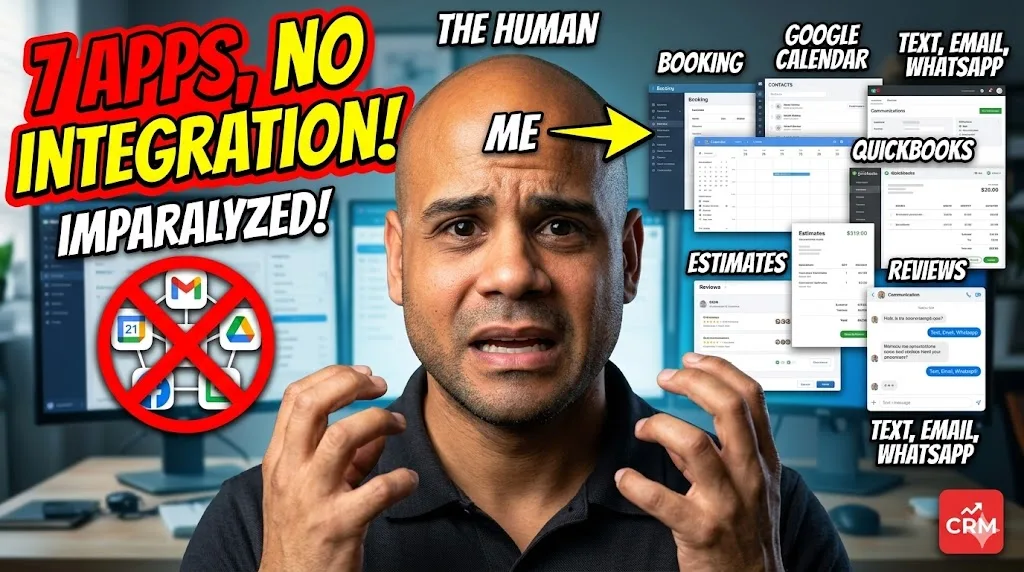
The average small business runs seven separate software applications.
Not enterprise companies. Small businesses. Contractors, service providers, solo operators, small teams.
Booking in one tool. Contacts in another. Calendar in Google. Invoices in QuickBooks. Estimates somewhere else. Reviews managed nowhere. Communication split across text, email, and whatever app a client prefers that week.
None of them talk to each other unless a human makes them talk.
That human is probably you.
What you’ve built, without meaning to, is a second job on top of your actual one. Every time a booking comes in, you copy the contact to your CRM. Every time a job closes, you send the invoice manually. Every time someone leaves a review, you have to notice it, respond to it, and log it somewhere if you even track that at all.
These tasks are small, which is what makes them expensive. Each one takes three minutes, they happen twenty times a day, and they happen at the exact moment you’re trying to close out another job, drive to a site, or actually talk to a client.
The integration gap doesn’t show up on a balance sheet. It shows up as mistakes.
The appointment that didn’t get a reminder because the booking never made it to the right calendar. The invoice that went out late because you were on a job. The lead that fell through because someone filled out your contact form and the notification went to an email address you haven’t opened in six months.
You’re not failing. You’re running seven systems that each assume someone else is managing the handoffs.
The fix is not switching apps. Switching apps is a fantasy most owners go through every two years: new software, same problems, migration headache, six months of people using the old one anyway.
The fix is connecting what you already have, in the sequence it already needs to communicate.
New booking creates a CRM contact. Closed job triggers an invoice and a review request. Form submission fires a follow-up before you’ve looked at your phone.
The human does the real work. The automation handles the invisible handoffs that were quietly eating hours.
That’s the integration gap. That’s where I work.